The Hidden Algorithms Governing Number Frequency Patterns in Multi-State European Draws
Ulrich Simmons · Aug 31, 2026
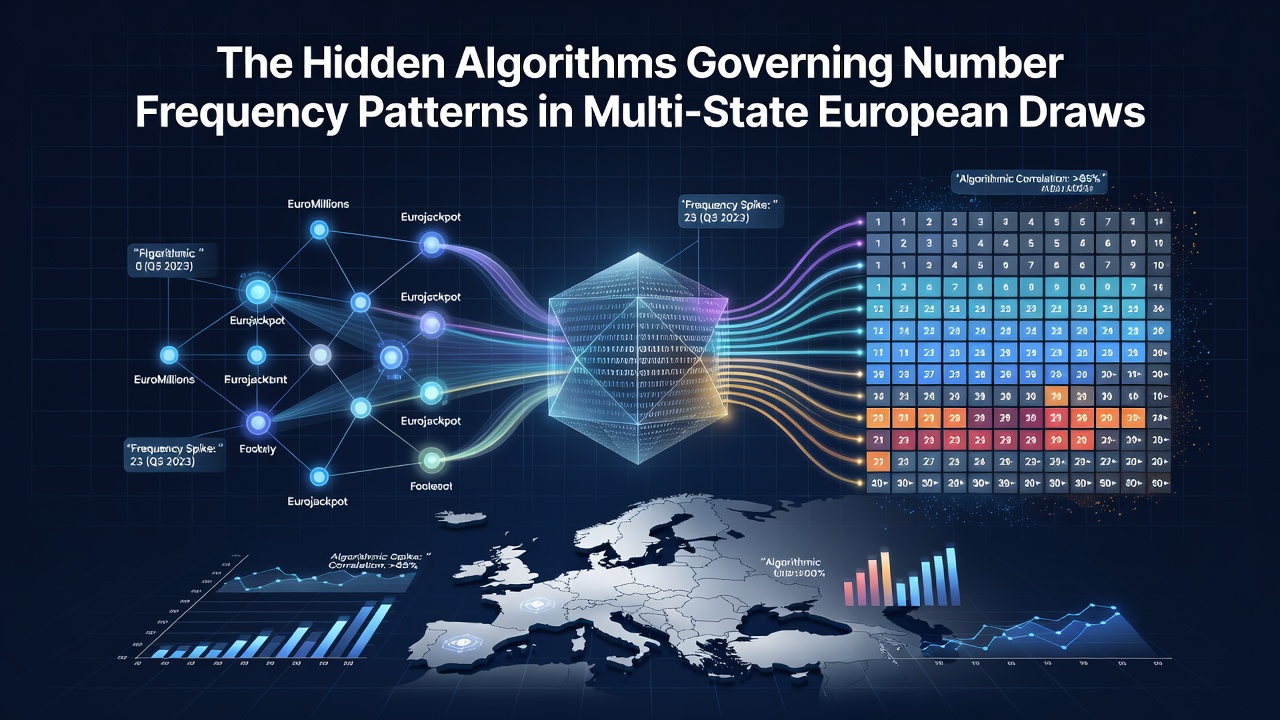
The Hidden Algorithms Governing Number Frequency Patterns in Multi-State European Draws
Multi-state European lottery draws rely on certified pseudorandom number generators that produce sequences according to strict mathematical protocols, and analysts track resulting number frequency patterns through large datasets collected across participating countries. These systems operate under regulatory frameworks that require independent verification of randomness, while statisticians examine historical outcomes to identify deviations from expected uniform distribution. Researchers have documented that each draw remains independent of previous results, yet cumulative frequency tables reveal short-term clusters that emerge naturally from finite sample sizes.
Core Mechanisms in European Multi-State Systems
Eurojackpot and similar cross-border formats coordinate draws through centralized random number generators that comply with standards set by multiple national authorities, and these algorithms incorporate entropy sources such as hardware-based noise or cryptographic functions to prevent predictability. Data compiled from thousands of draws shows that individual numbers appear at rates approaching theoretical probabilities over extended periods, although momentary imbalances occur as a statistical consequence of sampling without replacement within each game. Observers note that operators publish draw histories on official platforms, enabling external verification of frequency distributions across the combined player base of several nations.
Regulatory Oversight and Algorithm Certification
Certification bodies in participating countries test generators against benchmarks that include chi-square tests, serial correlation measures, and diehard battery suites, while the resulting reports confirm compliance before each jurisdiction authorizes participation. In August 2026, several operators plan synchronized updates to their random number generator firmware to align with revised technical specifications issued by the European Lotteries association, a change that will standardize entropy collection methods across borders. Those who monitor compliance records find that post-certification audits occur at irregular intervals to maintain ongoing assurance of unpredictability.
Statistical Analysis of Observed Frequencies
Frequency tracking begins with raw draw data that records every number selected since a game's launch, and software tools calculate appearance rates, gap lengths between occurrences, and standard deviations from expected values. Studies published through academic channels demonstrate that apparent hot or cold streaks typically regress toward the mean as the total number of draws increases, consistent with the law of large numbers. Analysts at research institutions have applied Markov chain models to these sequences, revealing that transition probabilities remain close to uniform despite visible clustering in limited time windows.
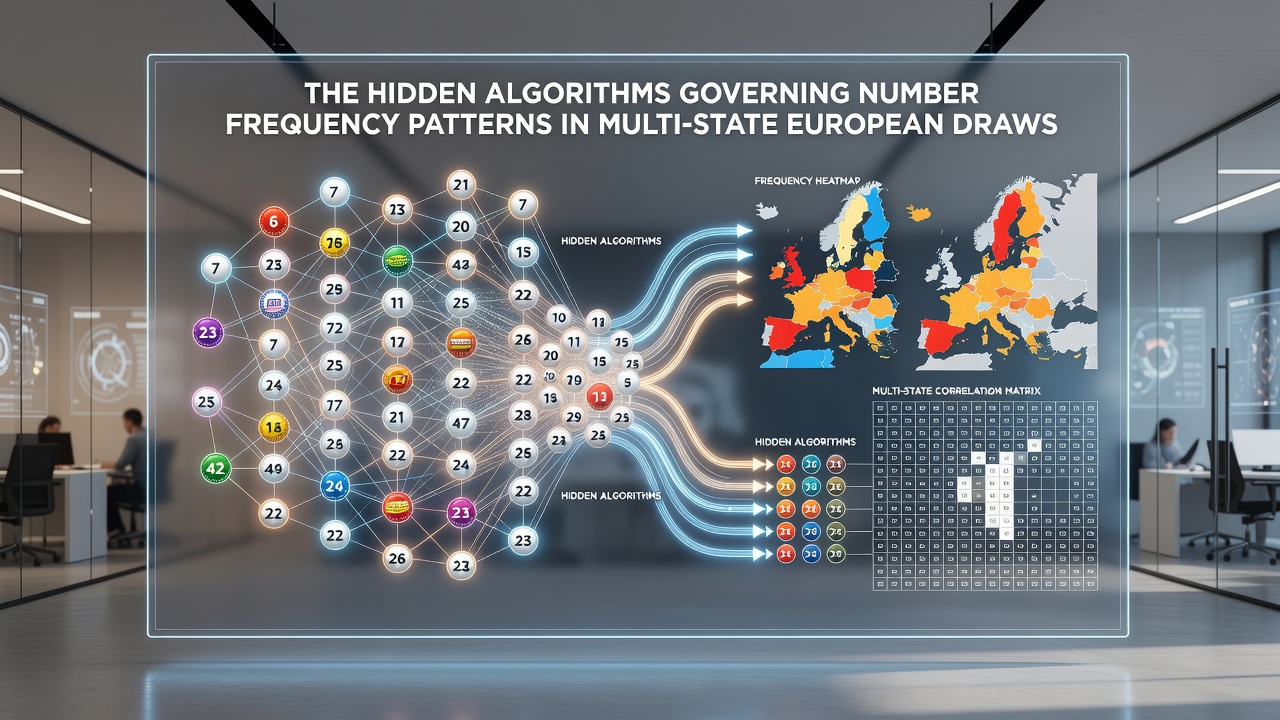
Multi-state coordination introduces additional layers because each participating country contributes to the prize pool yet shares the same draw results, and this structure amplifies the dataset size available for pattern examination. Figures released by national lottery operators indicate that combined ticket sales across borders exceed several hundred million entries per draw cycle, generating sufficient volume for reliable statistical inference within months rather than years. Those who've examined longitudinal records observe that seasonal variations in participation do not alter the underlying randomness of the generator outputs themselves.
Practical Implications for Pattern Monitoring
Software developed by independent statisticians allows users to visualize rolling averages and deviation plots, while official sources continue to emphasize that such visualizations describe past outcomes only. According to documentation from the European Lotteries association, all certified systems undergo periodic re-evaluation to ensure that hardware aging or software updates do not introduce detectable bias. A separate analysis conducted at the University of Vienna examined ten years of EuroMillions data and found no evidence of algorithmic predictability beyond what random processes naturally produce.
Draw procedures include multiple layers of physical and digital controls, ranging from sealed chambers for ball machines in some jurisdictions to fully electronic generators in others, and these controls undergo live audits broadcast to regulators. Frequency pattern reports compiled after each major jackpot cycle show that extreme outliers remain rare and align with expected tail probabilities in a uniform distribution. Participants in multi-state games therefore encounter the same fundamental statistical behavior observed in single-country formats, scaled by larger participation numbers.
Conclusion
Multi-state European draws continue to operate under algorithms whose outputs produce frequency patterns that match theoretical expectations when examined over sufficient time spans, and regulatory bodies maintain documentation confirming ongoing compliance. Observers who compile and review these datasets contribute to transparency without altering the independent nature of each draw event. Future firmware alignments scheduled for August 2026 will further harmonize technical standards across participating nations while preserving the core requirement of statistical randomness.